Why workflow automation fails at handoff points
A Zapier automation picks up a lead, pushes it into a CRM, and tags it "new." Nobody assigns it to a rep. Three weeks later, someone finds it marked "follow up" in a notes field, cold and unworkable.
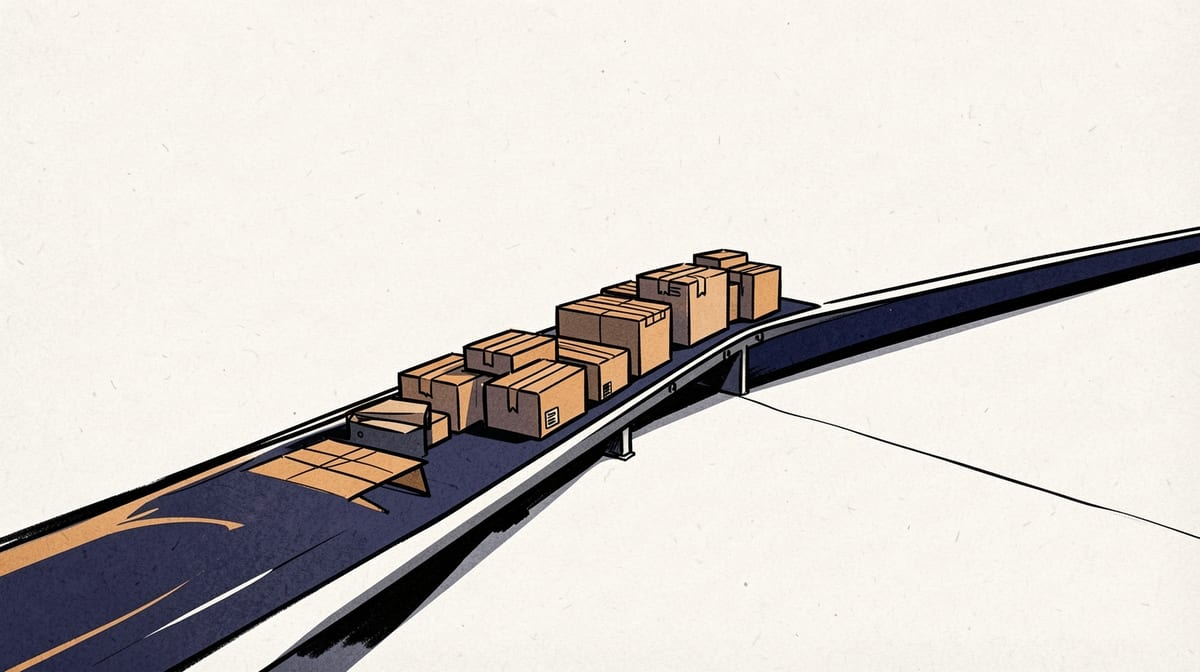
A Zapier automation picks up a lead, pushes it into a CRM, and tags it "new." Nobody assigns it to a rep. Three weeks later, someone finds it marked "follow up" in a notes field, cold and unworkable. The automation did exactly what it was built to do. The workflow still failed.
This is the pattern behind most workflow automation handoff failures. The tools run fine. Data moves from one system to another without errors in the logs. But the moment work crosses from one person, team, or system to another, something gets lost: ownership, context, or the next required action.
According to DEV Community, handoff failures happen when work transfers without clear ownership assignment, a defined deadline, or a specified outcome. None of that is a technical problem. It's a design gap, and it's the single most common reason automated workflows quietly stall.
The Handoff Paradox: Why Automation Breaks Where It Should Help Most
Handoffs are exactly where automation should earn its keep. Moving data between systems, routing tasks, triggering the next step: this is the easy part on paper. Yet it's where things go wrong most often.
The reason is simple. Automation tools are built to execute steps, not to make judgment calls about ownership or exceptions. A workflow can move a record from point A to point B perfectly and still produce a failure, because moving data isn't the same as completing a handoff.
According to SEM Nexus, handoff failures cascade across several downstream steps before anyone notices. A single cold lead sitting in Zapier might look trivial. In a multi-agent system, the same kind of silent failure can ripple through an entire pipeline before a human catches it.
That delay is the real cost. A broken API call fails loudly. A broken handoff fails quietly, and quiet failures are the ones that do the most damage because nobody is looking for them.
Three Layers of Handoff Failure: Ownership, Data, and Exceptions
Most handoff failures fall into three categories. Understanding which one you're dealing with changes how you fix it.
Ownership gaps. Work arrives somewhere, but no person or system is accountable for acting on it. According to Dhruv Jain's analysis, this shows up as tasks sitting in inboxes, chat threads, or CRM notes tagged "follow up" with no owner, no qualification rule, and no due date. Data transformation breaks. The handoff moves information, but the receiving system can't use it. According to FlowDevs, this happens when field formats change mid-transfer: a product list arrives as an unstructured text blob instead of line items, or nested webhook data flattens into something no downstream tool can parse. Exception handling gaps. The workflow handles the common case and breaks on everything else. According to ONES, a purchasing workflow that auto-approves orders under $500 will fail the moment an urgent order above that threshold shows up, because nobody built a path for it.Each of these failure types looks different in a dashboard, but they share a root cause: the workflow was designed for the happy path, and the handoff point is where the unhappy path shows up first.
The Hidden Cost of Assumed Responsibility
A lot of handoff failures come from an unspoken assumption: "the other system will handle it" or "someone will pick this up." Nobody wrote that down, and nobody is actually responsible for it.
According to Bitrix24, receiving teams need three things at every handoff, even when the data lives in an external system: a visible ownership assignment, a clear definition of what counts as "accepted," and a documented path for exceptions. Without these, a handoff isn't really a handoff. It's a hope.
This is especially common in sales workflows. According to Neo Techie, lead routing often stalls waiting on manual review, quote details get trapped in email threads, and CRM fields go unfilled during the handoff from sales to operations. Each of those is a small gap. Stacked together, they add weeks to a sales cycle.
The fix isn't more automation layered on top of the same ambiguity. It's assigning explicit ownership at the exact moment work changes hands, so "assumed responsibility" stops being the default state.
When Handoffs Become Bottlenecks Instead of Accelerators
Automation is supposed to remove bottlenecks. At handoff points, it can create new ones if it's too rigid to deal with anything outside its original design.
Consider the $500 purchasing threshold again. Under normal conditions, the automation is invisible, orders flow through without anyone noticing. The moment a legitimate, time-sensitive order falls outside that rule, the workflow doesn't adapt. It blocks.
That's the core tension in end-to-end process automation bottlenecks: a system built to run without human intervention has no graceful way to ask for help when it hits something it wasn't designed for. Without an escape hatch, every edge case becomes a support ticket, a frustrated employee, or a customer waiting on an order that should have shipped.
Signs a handoff point has become a bottleneck:
- Work consistently stalls at the same step in the pipeline
- Staff have built informal workarounds (spreadsheets, side Slack channels) to bypass the automation
- Exceptions are handled by whoever happens to notice the problem, not a designated owner
- The same type of request keeps breaking the same rule-based check
If any of these sound familiar, the automation at that point needs an exception path, not a tighter rule.
Data Transformation as a Handoff Risk
Format changes are one of the quietest causes of workflow integration data loss. A workflow can run successfully and still deliver garbage to the next system, because the data shape changed somewhere along the way.
According to FlowDevs, this often happens with webhook payloads. A nested JSON object that made perfect sense in the source system gets flattened during the handoff, and the receiving tool can't reconstruct the original structure. The automation didn't error out. It just handed over something unusable.
Here's a simplified example of the kind of payload that breaks on handoff:
{
  "order": {
    "id": "12345",
    "items": [
      {"sku": "A100", "qty": 2},
      {"sku": "B200", "qty": 1}
    ],
    "customer": {
      "name": "Example Customer",
      "email": "customer@example.internal"
    }
  }
}
If the receiving system expects a flat list of line items and instead gets this nested structure dumped into a single text field, someone downstream has to manually re-key the order. The data wasn't lost in transit. It just arrived in a shape nobody could use.
This is why testing handoffs with real production-like data, not clean sample records, matters more than testing the happy-path logic. Edge-case formatting is where most cross-system workflow design quietly falls apart.
The Fallback Queue Pattern: Designing for Graceful Failure
A well-designed handoff doesn't assume success. It assumes failure will happen sometimes and plans for where the work goes when it does.
According to Alltomate, workflows should stop cleanly at the point of failure, log the issue, preserve the original data payload, and route the record to a fallback or manual review queue. That's a very different outcome than a record silently vanishing into a notes field or an inbox nobody checks.
A basic fallback queue design looks like this:
Without this pattern, every failure becomes a one-off investigation. With it, failures become a known, trackable state, which is the difference between a workflow that degrades gracefully and one that just breaks.
Handoff Checkpoints vs. Manual Work: Finding the Right Balance
Not every handoff needs a human in the loop, but some absolutely do. The question isn't whether to add human review, it's where.
| Handoff Type | Human Review Needed |
|---|---|
| High-value transactions | Yesalways |
| Routine, low-risk data sync | Noautomate fully |
| New or ambiguous case types | Yesuntil a rule exists |
| Repeated, well-understood exceptions | Nocodify into automation |
This shows where human review adds the most value: high-stakes or unfamiliar handoffs, not routine ones.
The common mistake is treating human review as an all-or-nothing setting. Either everything gets checked, which slows the whole pipeline down, or nothing does, which is how a $600 urgent order gets stuck behind a $500 auto-approval rule.
A better approach: automate the predictable majority of cases, and route only genuinely ambiguous or high-risk handoffs to a person. As patterns in those "new case" exceptions repeat, turn them into explicit rules and shrink the manual review pile over time.
Cross-System Handoffs: Maintaining Context When Work Leaves Your Platform
The hardest handoffs are the ones that cross a system boundary, because context that lived in one tool doesn't automatically travel to the next one.
A lead with rich context in a marketing platform, scoring, source campaign, engagement history, can arrive in a sales CRM as just a name and email. The automation technically completed the handoff. The context that made the lead valuable got left behind.
This is a core challenge in automation decision points: the system making the handoff decision often doesn't have visibility into what the receiving system actually needs to act on the work. Fixing this usually requires deliberate mapping of required fields on both sides, not just a connector that moves whatever data happens to be available.
A short checklist for any cross-system handoff:
Skipping this step is how workflow integration data loss happens even when every individual tool is functioning correctly.
Exception Handling as a First-Class Design Concern
Most workflow automation projects treat exceptions as an afterthought, something to patch once the main flow is working. That ordering is backwards. The exception path is often where the real risk lives.
According to ONES, the failure isn't that exceptions exist, it's that the automation has no mechanism for recognizing and routing them. A workflow that handles 95 percent of cases cleanly but has no plan for the other 5 percent will fail in production, because the 5 percent is where the highest-value or most time-sensitive work tends to sit.
Building exception handling in from the start means:
- Identifying realistic edge cases before launch, not after a failure
- Defining who owns each exception type
- Setting a deadline for resolution, not an open-ended queue
- Logging exceptions so patterns can be turned into new rules over time
- Reviewing the exception queue on a regular cadence, not just when something breaks loudly
Treating exceptions as part of the core design, rather than a bolt-on, is one of the clearest differences between workflows that hold up under real-world conditions and ones that look fine in a demo but fall apart in production.
FAQ
Q: How do I identify which handoff points in my workflow are most likely to fail?A: Look for steps where ownership isn't explicit, where data format changes between systems, or where volume spikes could push cases outside your normal rules. These are the three patterns behind most handoff failures.
Q: Is a handoff failure the same thing as a data quality issue?A: No. A data quality issue means the information itself is wrong or incomplete. A handoff failure means the work transferred without a clear owner, deadline, or next action, even if the underlying data was accurate.
Q: Should every handoff include human review?A: No. Reserve manual review for high-value transactions and new or ambiguous cases. Routine, well-understood handoffs should run fully automated, with exceptions routed to a fallback queue for review.
Q: What should happen to work items when a handoff fails?A: They should land in a named fallback queue with the original data preserved, a logged reason for the failure, and an assigned owner, not disappear into an inbox or an unmonitored notes field.
Takeaways
Fixing handoff failures doesn't require ripping out your automation stack. It requires treating every handoff as a design decision, not a byproduct of connecting two tools.
- Assign explicit ownership at every handoff point, not just at the start and end of a workflow
- Build a fallback queue for failures instead of letting work disappear into inboxes or notes fields
- Treat exception handling as core design work, not a patch added after launch
- Test handoffs with messy, real-world data before trusting them in production
- Start with your highest-risk handoffs first, then expand automation outward as rules mature
The tools rarely fail outright. The gaps between them do, and that's exactly where the next round of workflow improvements should start.
Sources
Researched from the following. Figures and claims were current when this piece was written and may have moved since.
- DEV Communitydev.to
- SEM Nexussemnexus.com
- ONESones.com
- FlowDevsflowdevs.io
- Bitrix24bitrix24.com
- Dhruv Jain Substackdhruvjain19.substack.com
- Alltomatealltomate.com
- Neo Techieneotechie.in
Comments