Incident Commander vs Responder Roles Explained
A production database starts timing out at 2am. Within minutes, five engineers are in a call, each looking at a different dashboard, and nobody is sure who gets to decide whether to fail over to the r
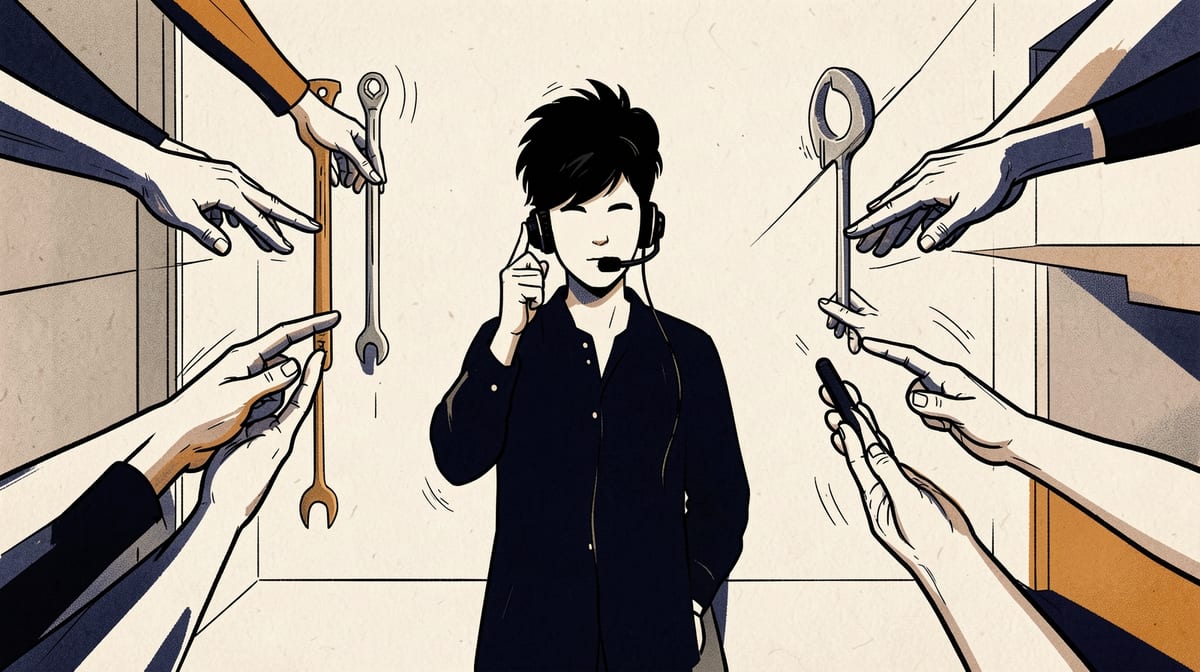
A production database starts timing out at 2am. Within minutes, five engineers are in a call, each looking at a different dashboard, and nobody is sure who gets to decide whether to fail over to the replica. This is the moment an incident commander role on-call exists to prevent.
Most teams that run on-call rotations eventually hit the same wall. Engineers are skilled at fixing things, but nobody is clearly in charge of deciding what gets fixed first, who gets paged next, or when to tell customers something is wrong. The incident commander (IC) role solves that gap by separating the job of leading an incident from the job of solving it.
This article breaks down what actually separates an IC from a responder, how the role fits into on-call scheduling, and what good incident command looks like in practice.
IC vs Responder: Core Differences in Authority and Responsibility
The incident commander is the primary decision-maker during a major incident, according to PagerDuty's incident response documentation. That means the IC owns the call on what happens next, even if they never touch a keyboard to fix anything.
Responders, by contrast, are the subject matter experts (SMEs) doing the hands-on work. A database engineer investigating query locks, a network engineer checking routing tables, a frontend developer rolling back a bad deploy. They each know their system better than the IC ever will.
The split in responsibility looks like this:
| Role | Primary job |
|---|---|
| Incident commander | Decides, delegates, communicates |
| Responder | Diagnoses, fixes, reports back |
This shows the functional split between coordination and technical execution during an incident.
An IC's job is to assess the situation, delegate tasks to the right SMEs, and keep control of the overall resolution process, per PagerDuty's documentation. They do not personally debug the failing service. They decide who should, and what that person needs to report back once they've looked.
This separation matters because technical depth and incident leadership require different skills. A brilliant backend engineer can be a terrible IC if they can't resist jumping into the code themselves. The incident command system, borrowed originally from emergency services, works because it forces someone to stay at the coordination level no matter how tempting it is to dive into the problem.
One structural rule carries over directly from that emergency services origin: the incident commander position must always be designated or assumed, according to the HPSM Incident Command System Companion Guide, even when other roles go unfilled. You can run an incident without a dedicated scribe or a communications lead. You cannot run one without someone in the IC seat.
The On-Call Dimension: How IC Roles Integrate with On-Call Scheduling
Incident response roles structure around two separate on-call rotations in mature organizations: one for ICs, one for technical responders. This is different from the smaller-team pattern where a single on-call engineer plays both roles by default.
A dedicated IC rotation usually pulls from a pool of senior engineers or engineering managers who understand the system landscape broadly, even if they aren't deep specialists in every service. They need enough technical fluency to ask good questions and evaluate options, but their core skill is coordination under pressure.
Here's how the two rotations typically interact:
- An alert fires and pages the primary on-call engineer.
- That engineer triages and decides if the incident needs full incident command.
- If so, they page the IC on-call rotation separately.
- The IC takes over coordination, and the original responder becomes an SME on the call.
This handoff point is where many organizations fumble early on. If there's no clear threshold for "this needs an IC," teams either escalate too late, after things have already spiraled, or too often, burning out a small pool of ICs on incidents that didn't need formal command at all.
A reasonable starting threshold: any incident affecting customer-facing functionality for more than a set number of minutes, or any incident touching payment, auth, or data integrity, triggers an automatic IC page regardless of what the first responder thinks.
Decision-Making Under Pressure: What Sets ICs Apart
Incident commanders have to rapidly evaluate shifting situations and make final calls about next steps and who else needs to be involved, according to FireHydrant. That's a fundamentally different cognitive task than debugging.
A responder's decision tree is narrow and technical: "is this a memory leak or a connection pool exhaustion?" An IC's decision tree is broader and often political: "do we roll back, do we failover, do we wake up the VP of engineering, do we post a status page update now or wait five more minutes?"
Good ICs tend to share a few habits:
- They create a lightweight incident action plan early, even if it's just three bullet points, because according to Asana, this kind of plan is critical for resolving incidents quickly once one is underway.
- They ask "what do we know" before "what do we think," separating confirmed facts from hypotheses.
- They set explicit check-in intervals ("we regroup in 10 minutes") instead of letting the incident drift without a rhythm.
- They are comfortable saying "I don't know, let's find out" rather than guessing to appear in control.
None of this requires being the smartest person on the call. It requires being the most disciplined person on the call.
Escalation Mechanics: When and How ICs Page On-Call Teams
Escalation is where the incident commander role on-call becomes very concrete. ICs mobilize additional engineers through targeted escalation tools, according to Xurrent, directing specific teams based on what kind of failure they're dealing with, whether that's database, networking, or application layer.
In practice, this means the IC is working an escalation matrix, not guessing who to call. A well-built on-call platform lets an IC page "whoever owns the payments service" without needing to know that person's name.
A simple example of what that escalation call looks like using a common incident tool's API pattern:
{
  "incident": {
    "type": "incident",
    "title": "Payments API elevated error rate",
    "urgency": "high",
    "escalation_policy": {
      "id": "PAYMENTS-ESCALATION",
      "type": "escalation_policy_reference"
    }
  }
}
The point isn't the specific payload format. The point is that escalation should be a lookup, not a phone-book exercise at 3am. ICs who have to manually figure out who's on-call for a given service lose minutes that compound quickly.
The IC also manages the incident call itself: paging necessary personnel, coordinating with customer communications teams, and distributing status updates, according to a widely cited Medium guide on running incident command by Jonathan Word. That's three separate communication threads running in parallel, which is part of why the role can't also be debugging code at the same time.
Communication Control: IC's Role in Stakeholder and Team Updates
An incident commander controls the communication flow for the entire incident lifecycle until it's resolved, according to Atlassian. This includes internal updates to engineering leadership and external updates to customers or the public status page.
This is one of the most underrated parts of the job. A technically perfect fix delivered with silence toward stakeholders still damages trust. Customers and leadership tolerate downtime far better when they get regular, honest updates than when they get nothing until the all-clear.
A useful discipline here: the IC should never let more than 15 to 20 minutes pass without some kind of update, even if the update is "we still don't know the cause, next check-in at [time]." Silence reads as either incompetence or indifference, even when the team is working hard behind the scenes.
From Responder to IC: Career Progression and Skill Development
Becoming an effective incident coordinator versus staying a strong individual engineer is a genuine fork in career development, not just a title change. Many organizations treat IC training as a natural next step for senior engineers moving toward technical leadership or engineering management.
The skills that make someone a good IC candidate:
- Broad systems knowledge across services, even without deep expertise in any one of them
- Comfort making decisions with incomplete information
- Clear, calm verbal communication under time pressure
- Willingness to delegate instead of jumping in to fix things personally
Most organizations build IC readiness through shadowing first. A prospective IC sits in on several real incidents as an observer, then runs a handful of lower-severity incidents with an experienced IC available as backup, before taking solo on-call shifts.
One common mistake is promoting someone to IC purely because they're the best engineer on the team. Technical excellence and incident leadership are correlated but not the same skill, and some of the best responders make poor ICs because they can't stop themselves from diving into the terminal.
Tools and Systems: Technology Stack for Modern IC Operations
An incident command system in engineering teams usually runs on a handful of overlapping tools rather than one unified platform. At minimum, an IC needs:
- An incident management platform for paging and escalation policies
- A dedicated chat channel or video bridge created automatically per incident
- A status page tool for external communication
- A shared document or timeline tool for the running incident log
- Dashboards and observability tools, though the IC leans on SMEs to interpret these rather than reading them personally
The trend over the last few years has been toward consolidation: platforms that auto-create the chat channel, page the right rotation, and start the status page draft the moment an incident is declared. This reduces the setup tax on the IC so they can spend their first two minutes thinking instead of clicking through five different tools.
AI-assisted detection is starting to shift some of this further upstream, flagging anomalies before a human would notice them and suggesting likely root causes based on historical incidents. This doesn't replace the IC's judgment call, but it does shrink the time between "something is wrong" and "someone is coordinating the response."
Measuring IC Effectiveness: Metrics Beyond Resolution Time
Response time efficiency is the most visible signal of good incident command, and the gap between a well-run and poorly-run incident is stark. According to Coralogix, poor coordination can stretch resolution from roughly 15 minutes into several hours for the same underlying problem.
But MTTR reduction playbooks that focus only on resolution time miss half the picture. Other metrics worth tracking for an IC program:
- Time to first IC page, measured from when the triggering alert fired
- Time to first stakeholder communication
- Number of people paged unnecessarily per incident
- Post-incident review completion rate
- IC rotation burnout indicators, such as back-to-back severe incidents per person
Tracking only speed can quietly push ICs toward skipping communication steps or under-staffing an incident to look efficient. A balanced scorecard keeps the role honest.
Common IC Mistakes and How to Avoid Them
New ICs tend to make the same handful of errors:
- Jumping into the technical fix themselves. This is the single most common failure. It feels productive but it strips the incident of its coordinator.
- Under-communicating because there's nothing new to say. Silence is worse than "no update yet."
- Failing to hand off cleanly at shift change. An incident spanning two shifts needs a documented handoff, not a verbal "yeah I think it's mostly fine now."
- Paging too many people too early, which creates noise and slows down the people actually doing the work.
- Skipping the post-incident review, or treating it as a blame exercise instead of a learning one.
Most of these are fixable with practice and a written runbook that an IC can follow even when adrenaline is high and judgment is compressed.
Building a Sustainable IC Program: Rotation, Training, and Support
A sustainable incident commander role on-call program needs more than a rotation schedule. It needs enough trained ICs that nobody is on call more than roughly one week in four or five, with a clear backup path if the primary IC is unreachable.
Practical steps for building this out:
- Maintain a pool of at least four to six trained ICs for any organization running frequent incidents
- Run quarterly tabletop exercises simulating incidents, so the muscle stays sharp between real events
- Pair every new IC with an experienced shadow for their first several live incidents
- Review IC performance in post-incident retros, separate from blame for the technical root cause
- Rotate IC duty separately from technical on-call duty wherever team size allows it
Key Takeaways
- The incident commander decides and delegates, the responder diagnoses and fixes. Keeping these separate prevents the chaos of everyone troubleshooting with no one coordinating.
- Dedicated IC rotations, separate from technical on-call, scale better than asking one engineer to do both jobs.
- Communication discipline, not technical brilliance, is what separates a good IC from a good engineer.
- Escalation should run through tooling and policy, not personal knowledge of who's on-call this week.
- Measure IC programs on more than resolution time. Speed without sustainable rotation and clear post-incident learning just moves the burnout problem around.
Sources
Researched from the following. Figures and claims were current when this piece was written and may have moved since.
- PagerDuty Incident Response Documentationresponse.pagerduty.com
- Xurrentxurrent.com
- Medium - Jonathan Wordargoday.medium.com
- HPSM Incident Command System Companion Guidehpsm.org
- Asanaasana.com
- FireHydrantfirehydrant.com
- Coralogixcoralogix.com
- Atlassianatlassian.com
- PagerDuty Incident Response Documentationresponse.pagerduty.com
Comments