Burp Suite costs 5x more than OWASP ZAP for CI/CD
Burp Suite Professional runs $449 to $499 per user per year, according to pricing cited by AceFortis and AppSec Santa. OWASP ZAP costs nothing. For a security team wiring vulnerability scanning into a
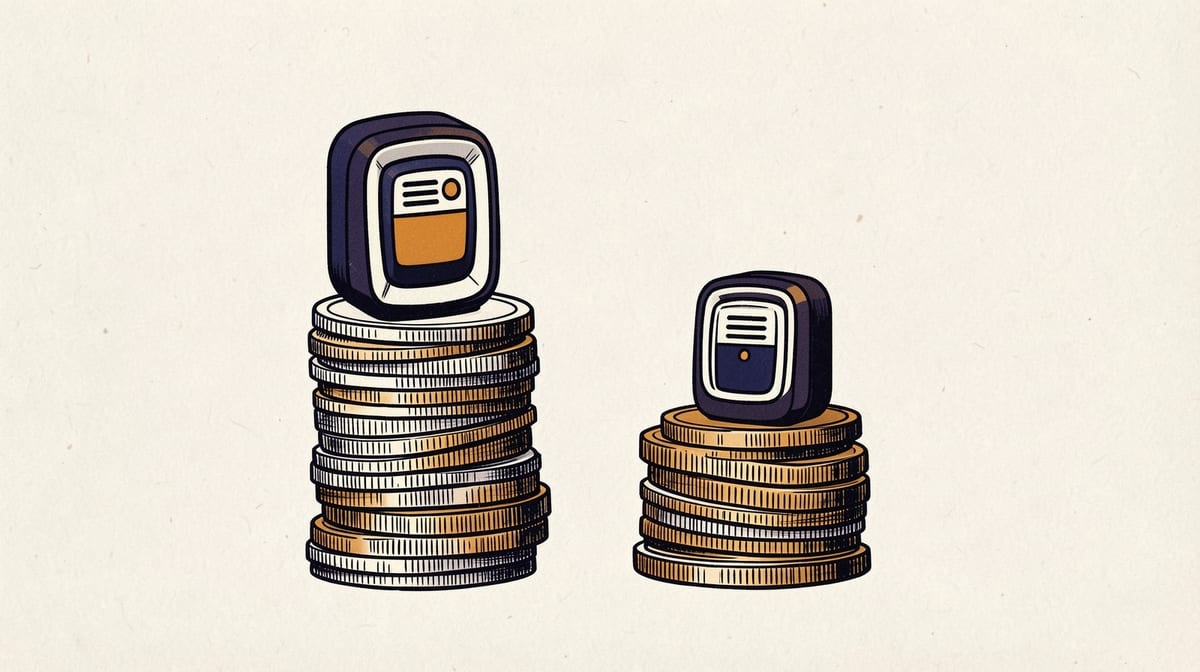
Burp Suite Professional runs $449 to $499 per user per year, according to pricing cited by AceFortis and AppSec Santa. OWASP ZAP costs nothing. For a security team wiring vulnerability scanning into a CI/CD pipeline, that gap works out to roughly a 5x cost difference per user, per year, before you factor in scale.
That number gets thrown around a lot in security forums, but it only tells part of the story. Licensing cost is easy to compare. What actually determines whether a tool is worth its price is how it performs inside an automated pipeline, not on a spreadsheet.
This piece breaks down the real cost comparison between Burp Suite and OWASP ZAP for CI/CD vulnerability testing, including where the free option genuinely wins and where paying for Burp still makes financial sense.
The 5x Cost Gap, Explained
OWASP ZAP is free and open source under the Apache 2.0 license, according to QASkills.sh. Every feature, including the active scanner and automation tooling, ships at no cost. There's no tiered plan, no per-seat fee, and no upsell path.
Burp Suite works differently. PortSwigger, the company behind it, sells Burp Suite as a commercial product, according to Medium contributor cybervolt. There is a free Community edition, but it comes with limited functionality, according to Pynt.io. To get the active scanner, session handling, and automation features most teams actually need for CI/CD, you need Burp Suite Professional at roughly $450 to $500 per user annually.
Multiply that across a five person security team and you're looking at $2,250 to $2,500 a year just in licensing. Scale to 20 users and it's $9,000 to $10,000. ZAP costs $0 at any team size, which is why the "5x" framing undersells the actual gap once you factor in headcount.
What You Actually Get for the Money
Price alone doesn't tell you which tool fits your pipeline. The two products were built for different jobs, and that shows up fast once you start using them.
OWASP ZAP for automation. ZAP ships with official GitHub Actions, Docker images, and YAML configuration built specifically for CI/CD pipelines, according to AppSec Santa. That means a developer can drop a scan job into a pipeline without writing custom glue code. It's designed to run unattended, on every build, without a human watching the results. Burp Suite for manual depth. Burp Suite Professional includes Repeater, Intruder, and access to the BApp Store, tools built for a human tester probing an application by hand, according to AppSec Santa. Forestal Security also notes that Burp Suite is widely treated as the benchmark for web penetration testing performance. That reputation is earned in manual testing scenarios, not automated pipeline runs.Vaadata's benchmark, cited by Forestal Security, found Burp Suite's session handling and scanning capabilities outperform ZAP in head-to-head testing. That matters for a pentester chasing edge cases in an authenticated app. It matters a lot less for a nightly scan that just needs to flag known vulnerability classes before a merge.
Cost Per Vulnerability: The Metric Nobody Puts on the Pricing Page
Sticker price is the wrong lens if your goal is finding and fixing vulnerabilities efficiently. The better question is how much each tool costs per vulnerability caught, factoring in license fees, setup time, and false positive triage.
Neither vendor publishes this number, and no independent study in the current research nails it down precisely. But the framework still matters for budgeting:
- ZAP's cost per vulnerability trends toward the setup and maintenance side, since the tool itself is free. Time spent tuning scan policies and triaging false positives becomes the real expense.
- Burp's cost per vulnerability includes the license fee, but often finds issues faster in manual sessions because of its more mature session handling and testing interface.
For a CI/CD pipeline that runs automated scans hundreds of times a month, ZAP's zero license cost usually wins on a per-scan basis. For a focused manual assessment of a high value application, Burp's speed and accuracy can offset its price if it shortens tester hours.
Hybrid Strategy: Use Both Tools for Different Jobs
Nothing forces a team to pick one tool for everything. A common, budget-friendly pattern splits the work by stage.
- Run OWASP ZAP in the CI/CD pipeline. Every commit or nightly build triggers a ZAP scan through its GitHub Action or Docker image. This catches common vulnerability classes early and costs nothing per run.
- Reserve Burp Suite for manual pentesting. Security engineers use Burp Professional for deep, authenticated testing on high risk applications before major releases, taking advantage of Repeater and Intruder.
- Feed findings both ways. Vulnerabilities Burp finds manually can inform new ZAP scan rules, tightening the automated net over time.
This approach limits Burp licenses to the security team members who actually do manual testing, rather than buying a seat for every developer touching the pipeline. It's the single biggest lever for controlling application security testing budget without giving up manual testing depth.
How the Price Gap Scales With Team Size
The dollar gap between these two DAST tools gets more dramatic as headcount grows. A solo developer or a two person startup security function barely notices $500 a year. A mid-size AppSec team feels it directly.
| Team size | OWASP ZAP annual cost | Burp Suite Pro annual cost |
|---|---|---|
| 1 user | $0 | $449-$499 |
| 5 users | $0 | $2,245-$2,495 |
| 20 users | $0 | $8,980-$9,980 |
| 50 users | $0 | $22,450-$24,950 |
This shows how licensing cost scales linearly with Burp Suite seats while OWASP ZAP stays free regardless of team size.
The 20 user row is the one worth arguing about. That's roughly the size of a growing AppSec function at a mid-market company, and it's where the annual gap crosses into "line item a CFO will ask about." Below that scale, the cost is often a rounding error. Above it, it becomes a real budget decision.
Hidden Costs Beyond the License Fee
License price is the visible number. It's not the only cost.
Setup and integration time. ZAP's official GitHub Actions and Docker images lower the barrier to pipeline integration, according to AppSec Santa. But tuning scan policies to reduce false positives still takes engineering hours, whether the tool is free or not. Training. Burp Suite's manual testing interface, with tools like Repeater and Intruder, has a real learning curve for anyone new to web application penetration testing. That ramp-up time has a cost even though it doesn't show up on an invoice. Maintenance. ZAP is maintained by volunteers as a free, open source project, according to Medium's cybervolt writeup. That community model means updates and fixes depend on contributor availability, which can be slower than a commercial vendor's release cycle. Burp Suite, sold and maintained by PortSwigger, comes with a company behind it, but that support is baked into the price you're already paying. Maintenance windows and false positive triage apply to both tools and scale with how many scans you run, not with which tool you chose. Budgeting only for the license fee and ignoring these operational costs is the most common mistake teams make when comparing DAST tool pricing.When Burp Suite's Price Makes Sense
Paying 5x more isn't automatically the wrong call. It depends on what the team actually needs the tool to do.
Burp Suite Professional is worth the license when:
- Your team runs frequent manual penetration tests on authenticated, complex applications
- Session handling accuracy directly affects billable pentest hours
- You need BApp Store extensions for specialized testing scenarios
- Your security engineers are already trained on Burp's workflow and switching costs would eat any savings
OWASP ZAP is the better fit when:
- The primary use case is automated scanning inside a CI/CD pipeline
- Developers, not dedicated security staff, need to run basic checks
- Budget constraints rule out per-seat licensing entirely
- The team values official CI/CD integrations over manual testing depth
Enterprise vs. Startup Economics
A startup with three engineers and no dedicated security hire almost always leans toward ZAP. Zero license cost matters more than manual testing polish when nobody on staff is doing deep penetration testing anyway.
An enterprise with a mature AppSec program often ends up paying for both. Burp Suite licenses go to the pentest specialists, and ZAP runs unattended across dozens of pipelines feeding hundreds of repositories. The license cost stops looking like an either/or decision and starts looking like two line items serving two different functions.
The content gap that matters here, and one the current research doesn't fully resolve, is whether PortSwigger offers volume discounts at enterprise scale. Public pricing sits at the $449 to $499 per user mark regardless of team size, based on the sources reviewed. Teams evaluating a large rollout should ask PortSwigger directly rather than assume linear scaling holds at 100+ seats.
Frequently Asked Questions
Q: Is OWASP ZAP good enough to replace Burp Suite entirely?A: For automated CI/CD scanning, yes, in most cases. ZAP includes official CI/CD automation and covers common vulnerability classes at no cost. It's a weaker substitute for hands-on penetration testing where Burp's manual tooling and session handling give testers an edge.
Q: Does Burp Suite's free Community edition cover CI/CD needs?A: Not fully. The Community edition ships with limited functionality compared to Burp Suite Professional, according to Pynt.io, and lacks the active scanner most teams rely on for automated testing.
Q: How much does it actually cost to run OWASP ZAP in a pipeline?A: The software itself is free, but expect engineering hours for initial setup, scan policy tuning, and ongoing false positive triage. Those hours are a real cost even though no invoice arrives.
Q: Can a five person team justify Burp Suite Professional?A: It depends on how much manual testing that team does. At $2,245 to $2,495 a year for five licenses, the cost is justified if manual pentest work is a core deliverable, not a nice-to-have.
Takeaways
- OWASP ZAP is free and includes official CI/CD automation, making it the default choice for automated pipeline scanning.
- Burp Suite Professional costs $449 to $499 per user annually and earns that price through manual testing tools like Repeater and Intruder.
- The cost gap scales with team size. It's negligible for a solo user and significant for a 20+ person AppSec team.
- A hybrid approach, ZAP in the pipeline and Burp for manual testing, controls license spend without sacrificing depth.
- Factor in setup time, training, and maintenance, not just license fees, when weighing application security testing budget decisions.
- Ask PortSwigger about volume pricing before assuming Burp's per-seat cost scales linearly at enterprise headcount.
Sources
Researched from the following. Figures and claims were current when this piece was written and may have moved since.
- AceFortisacefortis.com
- AppSec Santaappsecsanta.com
- QASkills.shqaskills.sh
- Medium - cybervoltmedium.com
- Pynt.iopynt.io
- Forestal Securityforestalsecurity.com
Comments